

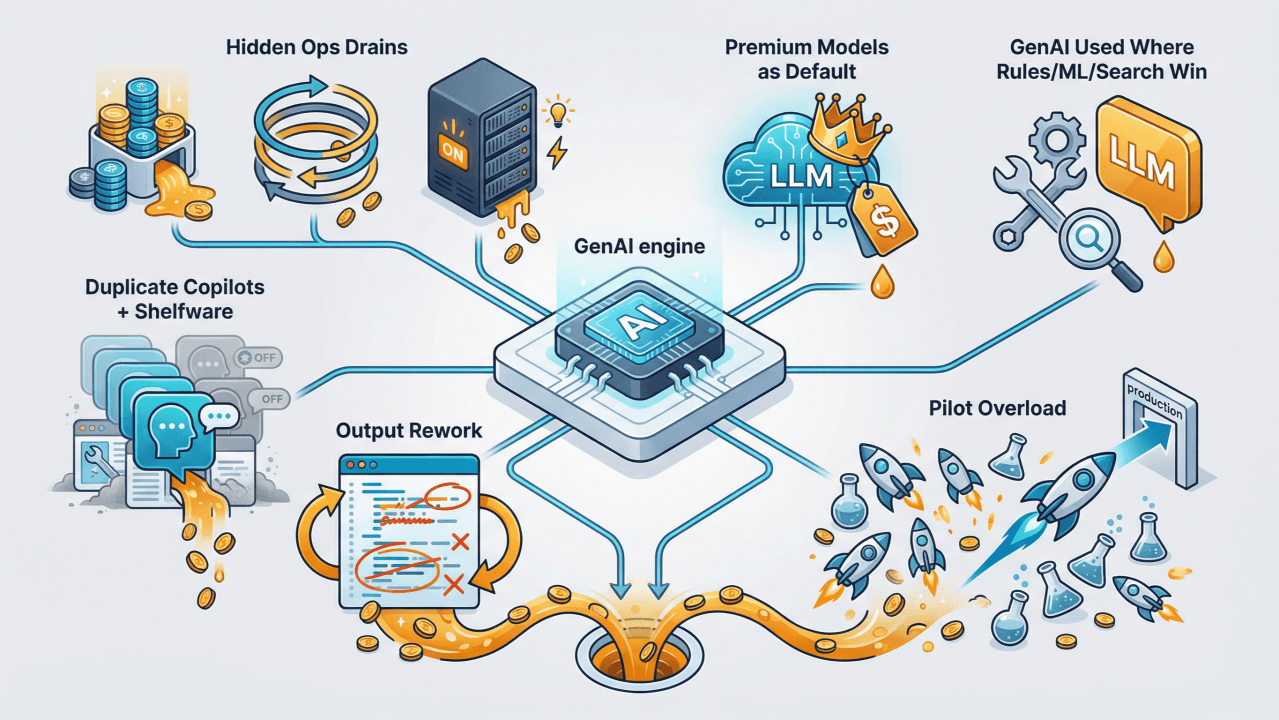
The GenAI spend trap: 6 budget leaks to fix now
By Chris Peel, InoGen AI UK CEO
GenAI spend has a habit of creeping up quietly before showing up as a serious line item.
In most organisations, this occurs because usage expands faster than governance, early build patterns become defaults, and small inefficiencies compound at scale; it's not due to recklessness. Unless you've shared your API keys on a public repository. Don't do that.
The conversations we've had with business leaders indicate this will be a focus area for many organisations in 2026. Indeed, PWC's CEO Survey (coincidentally released while I was writing this article) suggests many companies are about to hit the scaling phase; 12% CEOs say they have already provisioned AI-powered products and services to clients and customers, with 58% at the early or planning stages.
This will be a costly time for those that get it wrong. Whilst there are two sides to the ROI equation, it's clear that cost efficiency is part of the ongoing value case.
The good news is that the biggest sources of waste are usually structural and fixable.
Below are six common "spend traps" we are seeing repeatedly, plus practical ways to start addressing them (without degrading output quality or slowing teams down). Each one could probably have an entire article dedicated to them, and indeed might, though we hope this is a useful overview.